A network run by a physicist, not a recruiter.
Staffing firms in this field are usually built by people who have never calibrated a beam. That difference shows up in who they send you.
Robbie Hakeem, DABR, DABMP
Founder · Board-certified therapeutic medical physicist · Radiation Safety Officer
Robbie has spent his career in clinical medical physics — as a staff physicist, as Chief of Physics, and as Chief Operating Officer over six cancer centers, leading the physics and dosimetry teams that staffed them. He has commissioned one to two linear accelerators a year across Varian and Elekta platforms, at centers throughout the United States, and holds individual state licenses in New York and Arizona alongside ABR and ABMP board certification.
He founded Radphys Oncology Services in 2006 and has been running physics engagements under it ever since — commissioning, accreditation, and program oversight for centers that needed senior physics without a senior physics department. Radphys is the expansion of that practice into a network: the same standard of vetting, applied to physicists and dosimetrists across the country.
He is also co-founder and owner of Heelex Medical, a multi-site medical practice — an unusual thing for a physicist to be. It means he has sat on the operator's side of the table: payroll, coverage gaps, survey deadlines, and the real cost of an unfilled position. Radphys is built by someone who has had to buy coverage, not only provide it.
Founder · DABR · DABMP · RSO
- Commissioned the region's first Gamma KnifeAlong with IGRT, respiratory gating and SBRT — each a regional first
- East Tennessee's first three ACR accreditationsLed the programs through application and survey
- 1–2 linacs commissioned every yearAll major Varian and Elekta models
- COO and Head of Physics over 6 cancer centersLeading the physics and dosimetry teams across them
- HDR and intravascular brachytherapySource calibration, applicator and catheter QA, and treatment delivery
What "has done the work" means, concretely
Commissioning is where a physicist's depth either exists or doesn't, so it is the fairest thing to be specific about. A linac commissioning run means collecting and verifying percent depth dose curves, tissue-maximum ratios, and the full set of output factors — Sc, Sp, Scp, and output factors at depth. It means characterizing every wedge on the machine: physical, enhanced dynamic, and motorized. It means collimator transmission and focal spot optimization, and for electrons, collecting the data the planning system actually needs.
Then the data gets entered, the beam gets modeled, and the model gets checked — not assumed. Several geometries are generated and verified by measurement, across 3D, IMRT and VMAT, and where relevant portal dosimetry and SRS cones. All collected data is compared against an expected representative set for the project at hand, because a number that looks plausible in isolation is how modeling errors survive to first treatment.
That is the standard the network vets against. It is also why a physicist screens every physicist here: you cannot assess whether someone can commission an accelerator by reading their résumé.
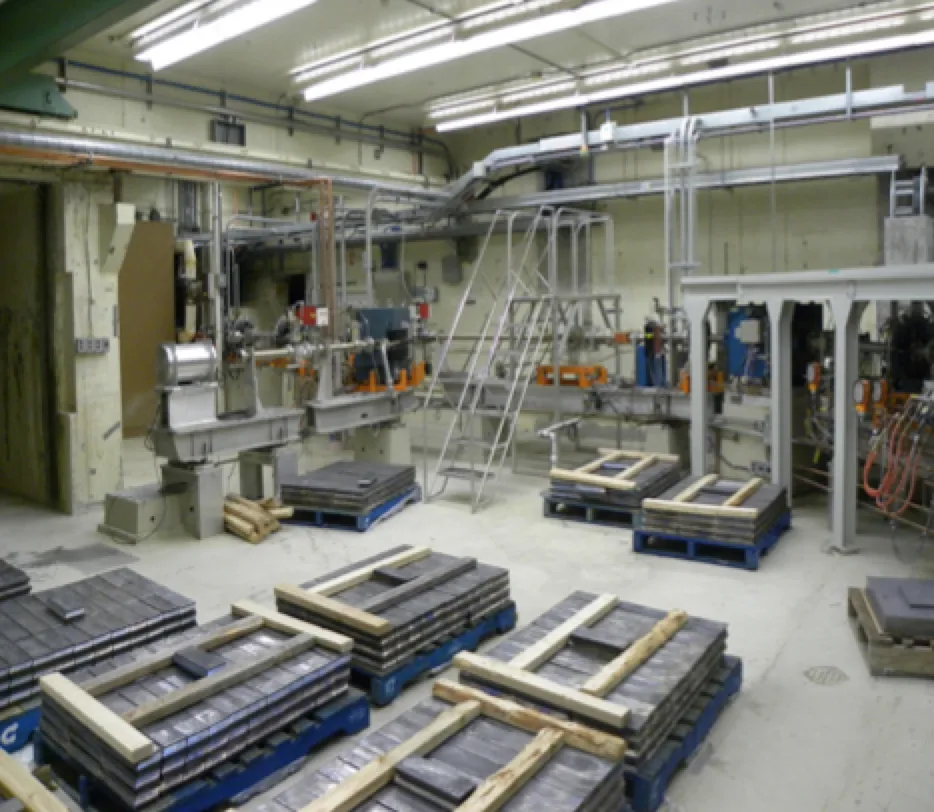
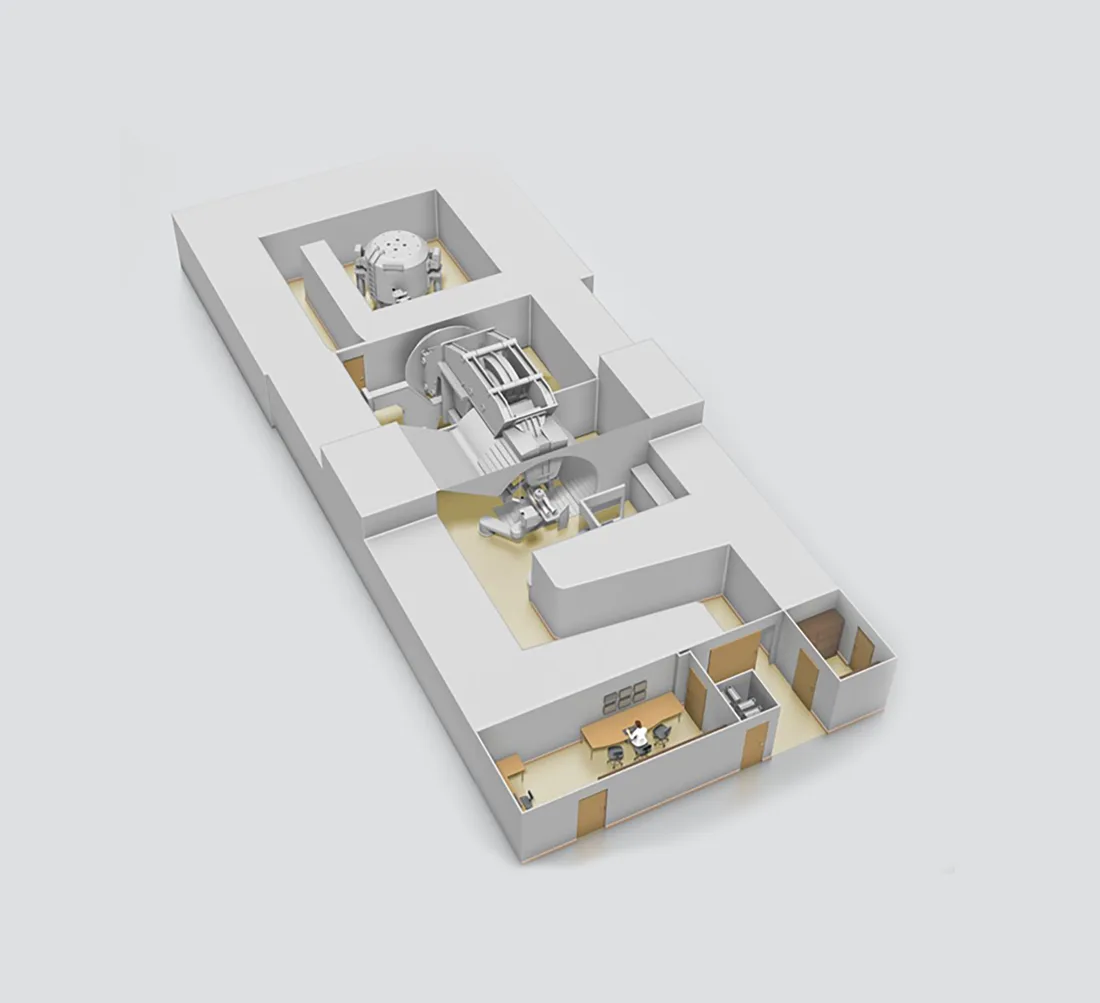
Shielding design and department layout — work delivered under Radphys.
Why that matters to each side
The person vetting your physicist has been your physicist
Credentials get verified by someone who knows what a weak answer sounds like. When Radphys says a physicist can cover your SBRT program, that judgment comes from someone who has commissioned one.
You're dealing with a peer
No one is going to ask you to work outside your credentials, misrepresent your scope to a client, or take an assignment that doesn't match what you said you wanted. The person on the other end of the phone has held the same license you do.
Physics questions get physics answers.
Whichever side you're on, the first conversation is with someone who has done the work.